Felt vs Silicone Furniture Pads — Which One Actually Works?
If you've ever searched for furniture pads, you've seen the split: felt on one side, silicone on the other. Each claims to be the best. But which one actually protects your floors, stays put, and gives you peace of mind? We tested both — extensively — so you don't have to guess.
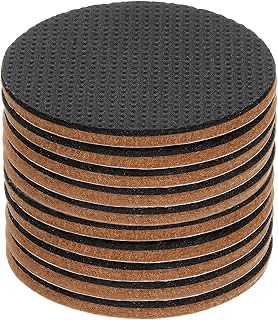
The Short Answer
Silicone pads win for anti-slip grip and noise reduction — especially for dining chairs, beds, and heavy furniture that shouldn't slide. Felt pads win for smooth sliding — ideal for office chairs and furniture you move frequently. But the full story is more nuanced. Let's break it down.
Head-to-Head Comparison
| Factor | Silicone Pads | Felt Pads |
|---|---|---|
| Anti-Slip Grip | ★★★★★ Stays put | ★★☆☆☆ Slides easily |
| Noise Reduction | ★★★★★ Absorbs impact | ★★★★☆ Reduces friction |
| Floor Protection | ★★★★★ Zero scratches | ★★★★☆ Gentle contact |
| Smooth Sliding | ★★★☆☆ Grippy | ★★★★★ Effortless |
| Durability | 3+ years | 1–2 years |
| Water Resistance | Waterproof | Absorbs moisture |
| Residue Risk | None with proper removal | Minimal |
| Best Use | Dining chairs, beds, sofas | Office chairs, bar stools |
1. Grip & Safety — The Most Important Factor
Here's a scene you probably know: you sit down on a dining chair, and it slides backward half an inch. Over months, that half-inch scratch becomes a permanent scar on your hardwood floor.
Silicone pads use a high-friction surface — specifically, SiliPad's patented wave-grip texture — that grips the floor firmly. The chair stays exactly where you place it. Felt pads, by contrast, are designed to slide. Great for an office chair you scoot around all day. Terrible for your grandmother's antique dining set on a polished wood floor.
Winner: Silicone — by a wide margin.
2. Noise — The "Midnight Kitchen" Test
If you've ever crept to the kitchen at 2 AM and cringed at the sound of a chair scraping across tile, you understand the value of silence. Silicone's 3mm cushion layer absorbs the vibration of every movement, reducing impact noise by up to 60%. Felt reduces friction noise, which helps, but doesn't absorb the thud when a chair leg meets the floor.
Winner: Silicone — especially for multi-story homes.
3. Durability — How Long Before They Fail?
Felt pads compress over time. After 6–12 months of regular use, the material flattens, adhesive weakens, and eventually the pad peels off. Silicone pads maintain their shape and elasticity for 3+ years. The difference comes down to material science: silicone is a polymer that returns to its original form after every compression. Felt is compressed fiber — it doesn't bounce back.
Winner: Silicone — lasts 2–3x longer.
4. When Felt Actually Wins
Felt isn't bad — it's the wrong tool for most jobs, but the right tool for a few. If you have an office chair on carpet that needs to glide freely, felt is ideal. If you push a bar stool back and forth 50 times a day, felt gives you the smooth motion you want. The key is matching the material to the use case.
Use felt when: the furniture needs to slide frequently and freely.
Use silicone when: you want the furniture to stay put and protect the floor from impact.
5. The Hybrid Approach — Why Not Both?
Most homes have both types of furniture. Your dining chairs should have silicone. Your desk chair should have felt. That's exactly why SiliPad's Ultimate Combo Box includes both materials in one organized set — silicone for stationary furniture, felt for sliding furniture. One box, whole home covered.
The Bottom Line
If you're buying furniture pads to protect your floors and reduce noise — get silicone. The grip, cushioning, and durability outperform felt in every category that matters for home protection. If you need smooth sliding for office use, get felt. Or do what 80% of our customers do: get the Combo Box and use the right pad for the right furniture.
Ready to Protect Your Floors?
Factory-direct pricing from Ningbo, China. Wholesale & OEM welcome.
View Products Contact Us